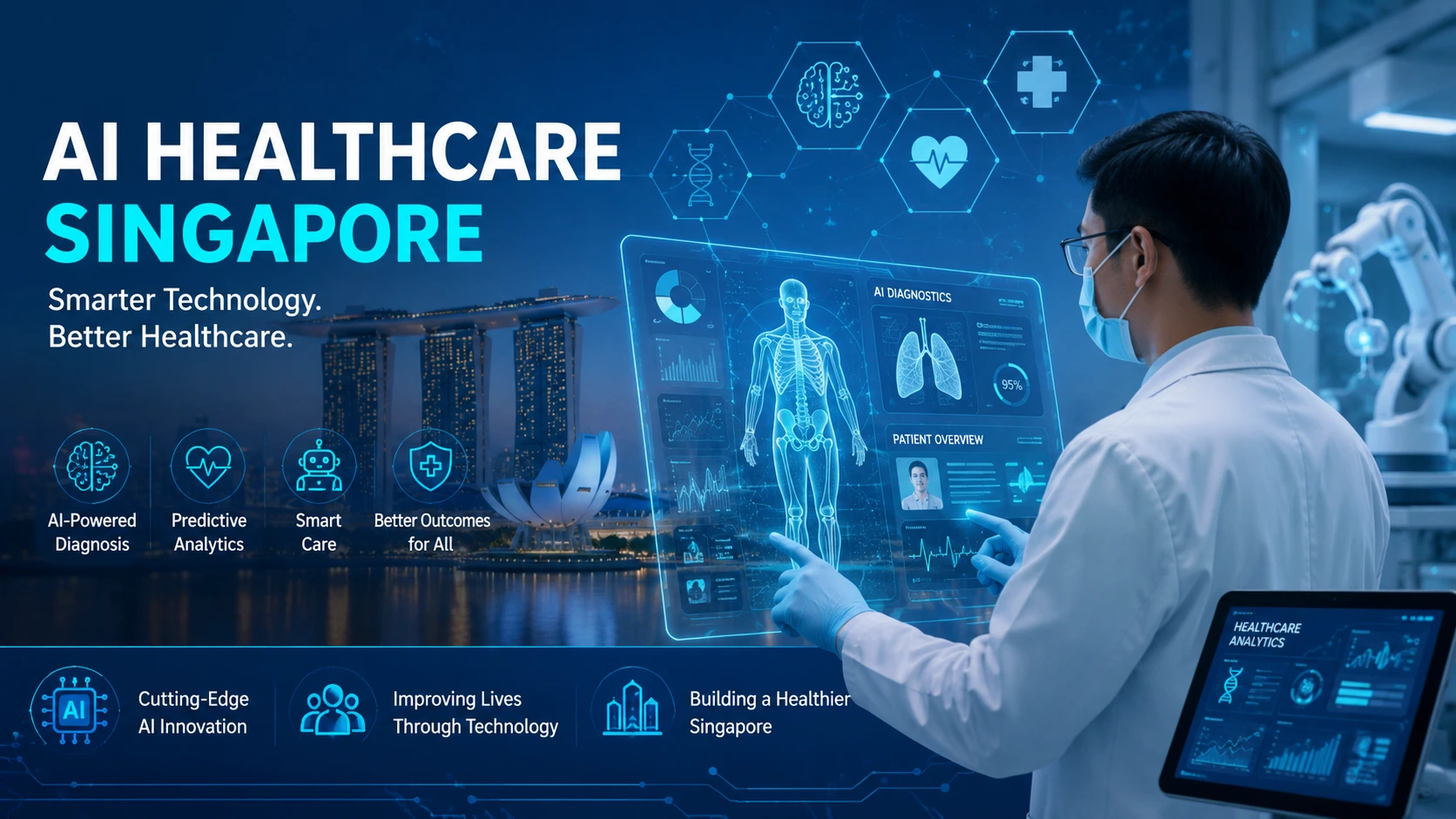
AI Healthcare Singapore: 10 Ways Artificial Intelligence Is Transforming Medical Care
Healthcare has always been about people. Doctors, nurses, caregivers, and patients working together toward better health. But something interesting has changed over the last few years. Technology isn’t just supporting healthcare anymore—it’s becoming an active partner in delivering faster, smarter, and more accurate care.
That’s exactly why AI Healthcare Singapore has become one of the most talked-about innovations in Southeast Asia. Hospitals, clinics, research centers, and healthcare startups are using artificial intelligence to improve diagnosis, reduce waiting times, personalize treatments, and help medical professionals make informed decisions.
And honestly… this is only the beginning.
If you’re wondering how AI Healthcare Singapore is shaping the future, this guide explains everything you need to know.
1. AI Healthcare Singapore Is Improving Early Disease Detection
One of the biggest strengths of AI Healthcare Singapore is its ability to detect diseases earlier than traditional methods.
Artificial intelligence analyzes enormous volumes of medical information in seconds. It can review X-rays, CT scans, MRI images, pathology slides, and patient records with remarkable speed.
Doctors still make the final diagnosis, but AI provides another layer of analysis that helps identify abnormalities that might otherwise be overlooked.
Early detection often means:
- Faster treatment
- Better recovery rates
- Lower healthcare costs
- Reduced complications
That’s a major advantage for both patients and healthcare providers.
2. Hospitals Are Becoming Smarter
Modern hospitals generate huge amounts of data every single day.
Patient admissions.
Laboratory reports.
Medical imaging.
Electronic health records.
Appointment schedules.
Managing all this manually can slow operations. That’s where AI Healthcare Singapore plays a significant role.
AI systems help hospitals:
- Predict patient admissions
- Optimize bed availability
- Reduce waiting times
- Improve staff scheduling
- Automate administrative work
Instead of replacing healthcare workers, AI allows them to spend more time caring for patients.
3. AI Helps Doctors Make Better Clinical Decisions
Medical professionals often need to process thousands of clinical guidelines, research papers, and patient histories before making treatment decisions.
That’s a lot.
AI Healthcare Singapore assists doctors by quickly analyzing relevant information and suggesting evidence-based recommendations.
For example, AI can compare a patient’s symptoms with millions of previous medical cases to identify possible conditions.
It doesn’t replace experience.
It supports it.
This partnership between doctors and AI leads to more confident clinical decisions.
4. Medical Imaging Is Becoming Faster and More Accurate
Radiology has seen some of the biggest improvements through AI Healthcare Singapore.
Artificial intelligence can analyze medical images much faster than traditional workflows.
It helps detect:
- Lung diseases
- Breast cancer
- Brain abnormalities
- Bone fractures
- Heart conditions
Radiologists still verify every result, but AI acts as an intelligent assistant that highlights areas requiring closer examination.
This speeds up diagnosis while maintaining high levels of accuracy.
5. Personalized Treatment Plans Are Changing Patient Care
Every patient is different.
Age.
Lifestyle.
Medical history.
Genetics.
Current medications.
All of these influence treatment outcomes.
AI Healthcare Singapore combines these data points to recommend more personalized treatment plans.
Instead of relying on one-size-fits-all approaches, healthcare providers can develop care strategies tailored to each individual.
Patients often experience:
- Better outcomes
- Fewer side effects
- More efficient treatments
- Improved long-term care
That’s personalized medicine becoming a reality.
6. AI Supports Preventive Healthcare
Treating disease is important.
Preventing it is even better.
This is another area where AI Healthcare Singapore is making a noticeable impact.
AI systems analyze patient history, lifestyle habits, wearable devices, and health records to identify potential health risks before symptoms become serious.
Healthcare providers can then recommend:
- Health screenings
- Lifestyle improvements
- Preventive medications
- Regular monitoring
Preventive care reduces long-term healthcare costs while improving overall public health.
7. Virtual Healthcare Is Growing Rapidly
Telemedicine has become increasingly common, and AI Healthcare Singapore is making virtual healthcare even more effective.
AI-powered virtual assistants help patients:
- Book appointments
- Check symptoms
- Receive medication reminders
- Access healthcare information
- Answer common medical questions
These digital tools provide convenient support while allowing doctors to focus on more complex cases.
And patients appreciate the faster response times.
8. AI Is Accelerating Medical Research
Medical research traditionally takes years.
Sometimes decades.
Researchers must analyze enormous datasets before discovering patterns that lead to new treatments.
AI Healthcare Singapore significantly speeds up this process.
Artificial intelligence helps researchers:
- Analyze clinical trial data
- Identify drug candidates
- Predict treatment effectiveness
- Discover disease patterns
This acceleration could lead to faster medical breakthroughs and improved patient care in the future.
9. Healthcare Administration Is Becoming More Efficient
Not every healthcare improvement happens inside an operating room.
Administrative efficiency matters too.
Hospitals manage appointments, insurance claims, billing, patient records, inventory, and compliance documentation every day.
AI Healthcare Singapore automates many repetitive administrative tasks.
Benefits include:
- Reduced paperwork
- Faster patient registration
- Improved appointment scheduling
- Better resource allocation
- Lower administrative costs
Less paperwork means more time dedicated to patient care.
10. Singapore Is Becoming a Global AI Healthcare Leader
Singapore has invested heavily in digital transformation, innovation, and smart healthcare initiatives.
That makes AI Healthcare Singapore one of the country’s fastest-growing technology sectors.
Government support, advanced healthcare infrastructure, world-class universities, research institutions, and innovative startups continue driving progress.
Healthcare providers increasingly collaborate with AI developers to improve:
- Patient outcomes
- Medical efficiency
- Clinical accuracy
- Healthcare accessibility
- Innovation across the healthcare ecosystem
As technology continues evolving, Singapore is well positioned to remain at the forefront of healthcare innovation.
Benefits of AI Healthcare Singapore
The rapid adoption of AI Healthcare Singapore offers advantages for patients, healthcare professionals, and medical organizations alike.
Some of the biggest benefits include:
- Earlier disease detection
- Faster diagnosis
- More accurate medical imaging
- Personalized treatment plans
- Improved patient experience
- Reduced administrative workload
- Better hospital efficiency
- Smarter preventive healthcare
- Accelerated medical research
- Higher quality healthcare services
These improvements create a healthcare system that’s not only more efficient but also more patient-centered.
Challenges Facing AI Healthcare Singapore
Like any advanced technology, AI Healthcare Singapore also faces challenges.
Healthcare organizations must carefully address:
- Patient data privacy
- Cybersecurity
- Ethical AI usage
- Regulatory compliance
- AI transparency
- Staff training
Building trust is essential. Patients need confidence that AI supports safe, responsible, and secure healthcare decisions.
Fortunately, Singapore continues strengthening governance frameworks to encourage responsible AI adoption while protecting patient information.
Why Businesses Are Investing in AI Healthcare Singapore
Healthcare providers, technology companies, research institutions, and investors all recognize the long-term potential of AI Healthcare Singapore.
Demand continues growing because AI helps solve real healthcare challenges—not just theoretical ones.
As medical data expands every year, artificial intelligence becomes increasingly valuable for transforming complex information into practical clinical insights.
The future looks promising… and we’re only seeing the early stages of what’s possible.
Conclusion
AI Healthcare Singapore is reshaping the healthcare industry through smarter diagnostics, personalized treatments, faster research, improved hospital operations, and better patient experiences. As technology continues advancing, AI Healthcare Singapore will play an even greater role in supporting doctors, empowering patients, and improving healthcare outcomes across the country. Organizations that embrace AI Healthcare Singapore today are positioning themselves for a future where healthcare is more efficient, accessible, and data-driven. With continued innovation, strong governance, and ongoing collaboration between healthcare professionals and technology experts, AI Healthcare Singapore will remain a driving force behind modern medical excellence.
Frequently Asked Questions (FAQs)
1. What is AI Healthcare Singapore?
AI Healthcare Singapore refers to the use of artificial intelligence technologies in Singapore’s healthcare sector to improve diagnosis, patient care, hospital management, medical research, and operational efficiency.
2. How does AI improve healthcare in Singapore?
AI improves healthcare by analyzing medical data quickly, supporting disease detection, enhancing medical imaging, personalizing treatments, automating administrative tasks, and helping doctors make informed decisions.
3. Is AI replacing doctors in Singapore?
No. AI supports healthcare professionals by providing data-driven insights and improving efficiency, while doctors continue making final medical decisions and delivering patient care.
4. What are the benefits of AI Healthcare Singapore?
Some key benefits include faster diagnosis, early disease detection, personalized medicine, improved hospital operations, reduced paperwork, enhanced research, and better patient outcomes.
5. What is the future of AI Healthcare Singapore?
The future of AI Healthcare Singapore includes more advanced predictive healthcare, AI-assisted surgeries, smarter hospitals, improved telemedicine services, precision medicine, and continued healthcare innovation across Singapore.